Labels

Tuesday, 13 December 2016

Editing - Psychological Thriller


Continuity editing - This is used when the audience needs to understand something making it likely to be used at the end of the psychological thriller when the mystery is revealed The shots are long, running smoothly and they all link together (unless there are flashbacks). Continuity editing is used in American Psycho. At the end of the film when Patrick Bateman realises that he hasn't really killed anyone the shots are long and there is also a narrative where Patrick is speaking out loud trying to make sense of what is happening to him. The speaking out loud also help the audience understand it as well.
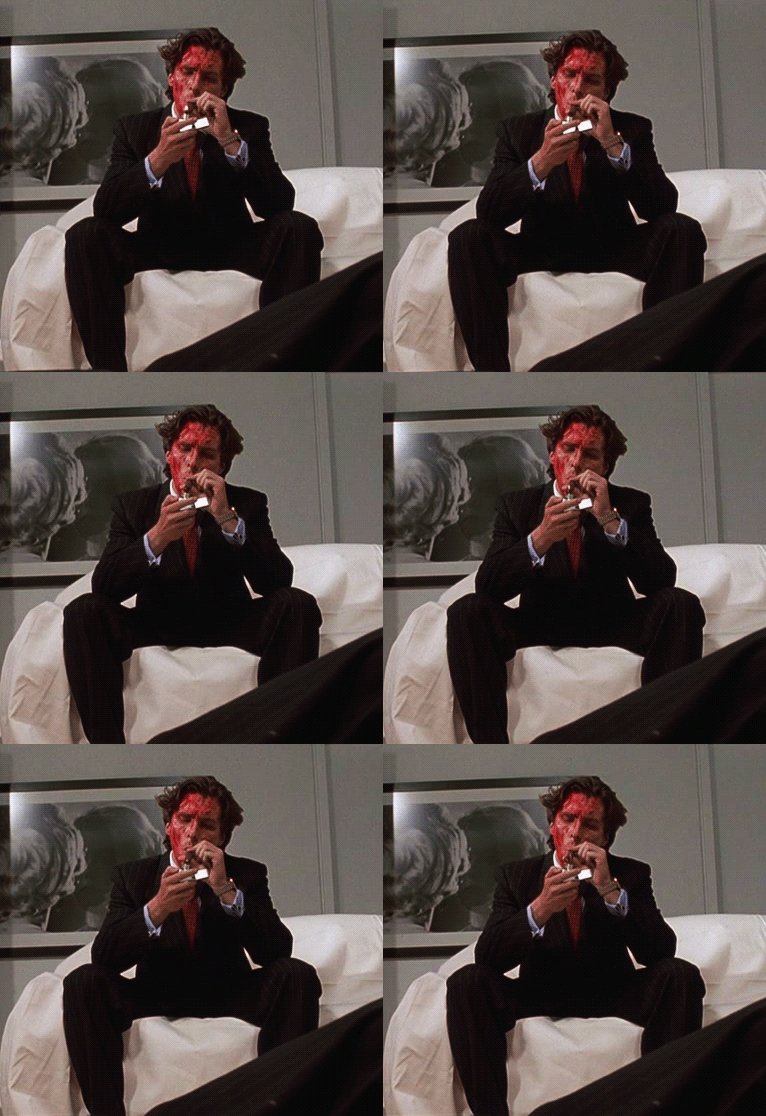
Image result for american psycho

Straight cut - This is seen when there is a lot of action going on. The shots jump from different focus points when there is a tense part going on. These can be running scenes. A example of this is in The Bourne Ultimatum. The fast cutting produces a fast paced, action feel. It keeps the audience on edge and filled with tension and anxiety. 

Match Cuts -  This type of editing cuts two unrelated scenes together but show the relationship between them. This is especially used in thrillers to show how the unexpected can be related together. The video below shows many different films that all include match cut editing.
 

Iconography - Psychological Thrillers

Iconography is being able to recognise a film based on one image, logo or symbol.

Image result for paranormal activity shadowShadows - these provide a psychological thriller with the 'on-edge' feeling as there is an uncertainty as to what that shadow is. Generally, when shadows are present, the protagonist is unaware of the figure behind them which creates this fear. One example of this is in paranormal activity.  

Running water - This is a very iconic factor in thrillers, it creates some discomfort and is a little sinister. It can parallel the draining of life (like in psycho) or parallel dripping blood.

Confined Spaces - This creates discomfort amongst audiences and makes them anxious as the audience will imagine themselves in that situation. This brings out the insecurities and fears that the audience hold. 

Image result for psycho shower scene
Knifes - These are the most recognisable icons regarding psychological thrillers. They portray the idea of violence and murder. A knife (or any sharp object) sets the tone for he film. An example of iconography is the shower scene in Alfred Hitchcock's 'Psycho' 

Different kinds of recognisable props:

    • Blood 
    • Guns 
    • Drugs 
    • Everyday objects 
    • Mental Illness 
Image result for the purgeThese are used to stick to the general theme of psychological thrillers and they guide the audience and hit to when something bad is going to happen (like when a gun is shown on camera but hidden to one character on screen). The everyday objects help the audience imagine what they would feel like in that situation. An example of a recognisable prop is the masks from 'The Purge'. The anonymity that comes with the masks is scary for the audience, making them iconic. 

Psychological thriller - Camerawork/Cinematography


  • Low angle shot - looking down makes the figure or object look inferior and vulnerable.
Related image
  • Extreme long shot - puts the settings into perspective (if used on a house etc)
Image result for extreme long shot movie
  • Close up - these are used to show the reaction on the actor/actresses face,capturing detail by showing emotion.
Image result for close up shot film
  • High angles - perfect to show intimidation and superiority. 
Related image
  • Over the shoulder shot - builds suspense. 
Image result for over the shoulder shot batman
  • Tracking/Planning shot - used to show id a character is being followed and to build up suspense as the audience doesn't know what is going to be shown 

    Image result for perspective shot film

    Sounds and Music within Psychological Thrillers

    Often in Psychological thrillers the music and sounds that are used are known as ‘Contrapuntal’. This means that the sound does not match the action on screen. This creates a disorientating effect on the audience - making them question what they are seeing - while also leaving them wondering what will happen next. 

    One example of this is in the film Reservoir Dogs (Dir. Quentin Tarantino). During the very gruesome scene where 'Mr Blonde' slices off a Cop's ear. However during this scene, a very upbeat song come on the radio totally juxtaposing what is happening in the scene.


    Another example is in the film American Psycho directed by Mary Harron. In this slasher film, Patrick Bateman is preparing for his next kill. While this is happening, he asks his victim if he likes 'Heuy Lewis and the news'? moments later, once the song is on, Norman kills the victim. This music is the exact opposite to what would be expected in a horror film.


    In psychological thrillers, Paralleling sounds are also used. These are sounds and music that relate to the situation on screen. If you were watching a film about a car chase, you would expect to hear things like, horns, tires screeching and the roaring engines. 

    One example is in the movie The shining, directed by Stanley Kubrick. In the famous 'here's Johnny scene' tension building music is played in the background. This causes the audience to feel on edge as they don't know whether the victim (Wendy) is going to make it out of that situation alive. 

    A final example of paralleling sounds is in fights scenes. The use of nerve wracking music in the background creates tension as well as this, screams in the background, gun shots, explosions and more all make the scene seem more realistic. The Highway scene in Captain America: The Winter Soldier is a good example of this as you can hear all these factors. 


    Psychological Thrillers - Characteristics (settings and characters)


    Tuesday, 6 December 2016

    Sound/Music within Films


    • Eerie and intense music to build up tension and suspense

    • High pitches sounds create discomfort

    • e.g. Jaws music creates a suspenseful atmosphere building up and prepare the audience for conflict or sudden change

    • Fast paced music for action scenes e.g. chase scene

    • Low vibrations usually used to instil fear in the audience

    • Noise of panic e.g. alarm , to create an unsettling and unnerving atmosphere

    • Music and sounds are used to heighten our senses and make us more aware of the situation as it changes our emotions to fit with particular scenes

    • Ambient sounds within dramas used to create realism

    Chracters Features within Thriller/Drama Films